

Business Automation Guide 2026: Transform & Scale Your Business
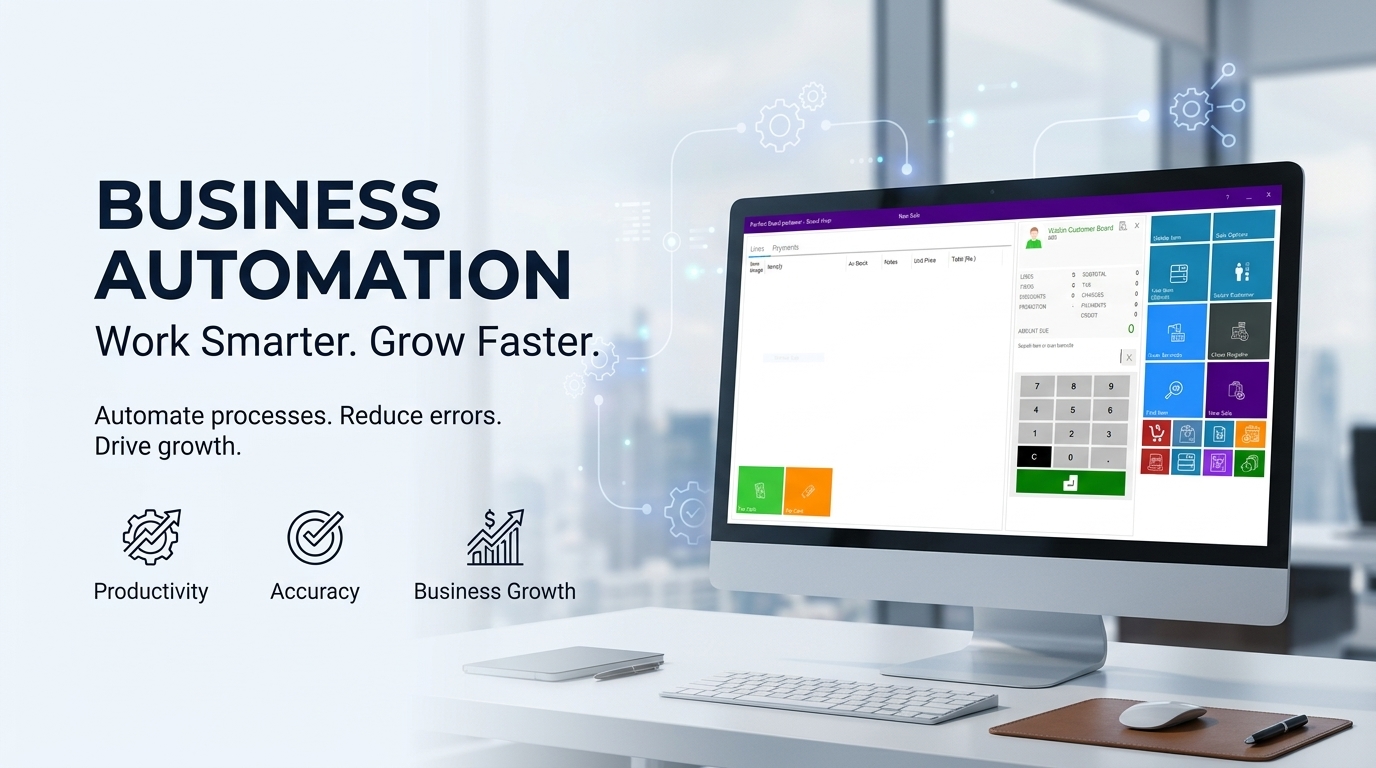
Business Automation: How Automation Is Transforming Modern Businesses
Introduction
In today’s fast-paced commercial landscape, reliance on manual operational methods is one of the quickest ways for a company to lose its competitive edge. Paper ledgers, isolated spreadsheets, manual order logging, and multi-step approval delays burn through valuable time and drain profit margins.
Across industries, forward-thinking business owners, retail operators, and corporate decision-makers are shifting away from slow manual tasks. Modern digital business automation has moved from an enterprise-only luxury to an operational necessity. By leveraging integrated business management software and intelligent workflows, modern organizations streamline complex operations, drastically cut down human error, and position themselves for rapid, cost-effective scaling.
What Is Business Automation?
Business automation is the practice of using technology, including software, artificial intelligence (AI), cloud platforms, and application programming interfaces (APIs)to execute recurring daily tasks and business processes without requiring manual human intervention.
Rather than treating each operational unit as an isolated island, business workflow automation links every node of an organization together:
- Cloud Systems & ERPs: Centralize operational records, keeping inventory, sales, and employee data synced across multiple branches in real time.
- APIs & Webhooks: Connect specialized third-party software (e.g., matching online store orders directly to physical warehouse stock levels).
- AI Engine & Rule-Based Logic: Trigger automated actions based on live data, such as routing high-value leads to top sales agents or auto-generating reorder alerts when inventory hits a critical minimum threshold.
Why Businesses Need Automation
Growing organizations often encounter operational bottlenecks when relying on manual systems. Transitioning to automated workflows addresses key operational challenges:
- Manual Data Entry Bottlenecks: Re-keying customer information, invoices, or stock numbers across different systems wastes hours and invites data entry errors.
- Costly Human Errors: Miscalculated tax rates, lost customer leads, incorrect shipment dispatching, and duplicate billing damage customer relationships and margins.
- Repetitive Administrative Work: High-value staff members frequently spend hours formatting spreadsheets, processing payrolls, or chasing email signatures instead of working on growth strategies.
- Departmental Silos: When sales, accounting, and warehouse management operate on separate tracking systems, teams lack a single source of truth.
- Lack of Real-Time Information: Waiting days for end-of-month financial reports prevents leadership from taking immediate strategic action.
- Scalability Bottlenecks: Expanding operations under manual workflows requires hiring linear administrative headcounts, raising fixed overheads with every growth cycle.
Key Areas That Can Be Automated
Modern business process automation covers nearly every department in a commercial enterprise:
- Sales and Invoicing
Automated sales pipelines update deal statuses instantly. Once a deal closes, the system generates compliant tax invoices, sends automated payment reminders, and records the sale in accounting databases.
- Inventory Management
With automated inventory management, physical stock adjustments reflect instantly across point-of-sale (POS) systems, e-commerce storefronts, and regional warehouses, preventing stockouts and over-purchasing.
- Accounting and Finance
Automates bank reconciliations, expense categorizations, profit-and-loss statements, and recurring billing schedules while maintaining audit trails.
- Customer Relationship Management (CRM)
Captures website inquiries automatically, assigns qualified sales managers based on territory or expertise, and tracks every client interaction.
- Payroll and Human Resources
Calculating salaries, tax withholdings, monthly deductions, attendance records, and leave requests, generating pay slips and depositing funds automatically.
- Procurement & Vendor Management
Triggers purchase requisitions automatically when stock levels hit safety limits, tracks vendor fulfillment timelines, and matches incoming stock receipts to purchase orders.
- Marketing & Customer Support
Sends targeted email nurturing sequences based on customer actions. AI chatbots handle routine support inquiries 24/7, escalating complex inquiries to live agents.
Benefits of Business Automation
Lower Operational Costs: Eliminates redundant data processing, reduces administrative bloat, and optimizes inventory storage.
- Higher Accuracy: Standardized digital operations ensure consistency across billing, stock management, and compliance.
- Faster Decision-Making: Access to real-time analytics gives executives instant operational insights.
- Scalable Business Growth: Scale transactional volume, product ranges, and branch count without multiplying administrative headcount.
- Enhanced Customer Experience: Faster order processing, accurate shipments, and instant customer service build long-term brand loyalty.
Business Automation vs. Manual Processes
|
Feature / Metric |
Manual Operations |
Automated Business Operations |
|
Execution Speed |
Slow; bound by staff working hours and approval delays. |
Real-time; operates 24/7 without manual interventions. |
|
Error Rate |
High risk of human error during manual data entry. |
Near zero error rate through standardized workflows. |
|
Operational Costs |
Scales up linearly with business growth. |
Fixed and scalable; costs decrease per transaction handled. |
|
Data Visibility |
Delayed; reliant on manual daily/monthly reports. |
Immediate; accessible through central dashboards. |
|
Compliance & Audit |
Difficult; vulnerable to misplaced paper documentation. |
Automated, time-stamped, and audit-ready records. |
|
Employee Experience |
Tedious, repetitive administration causes burnout. |
High engagement focuses on growth activities. |
The Role of AI in Business Automation
Artificial Intelligence expands traditional rule-based workflow systems into intelligent environments. AI business automation enables platforms to reason, learn, and adapt:
Raw Data Input ►► AI Machine Learning Models ►► Predictive Insights & Automated Actions
- Predictive Demand Forecasting: Machine learning algorithms evaluate historical sales data, local holiday patterns, and market trends to predict stock demand, lowering carrying costs.
- Intelligent Document Processing (IDP): OCR engines read and parse scanned purchase orders, receipts, and invoices, posting financial line items directly into ERP databases without manual entry.
- Smart Customer Support: Natural Language Processing (NLP) models answer complex user questions, process returns, and recommend products tailored to user purchase history.
- Anomaly Detection: AI identifies unusual transaction patterns, flagging potential internal fraud or billing discrepancies before payments are executed.
Step-by-Step Implementation Strategy
Implementing automation for small businesses and mid-sized enterprises requires a structured, phased approach:
- Map Repetitive Workflows: Identify repetitive processes that consume excessive administrative hours (e.g., manual sales tax filings, Excel-based stock tracking).
- Audit Current Operational Bottlenecks: Document end-to-end task paths to fix broken or inefficient procedures before applying software.
- Select Scalable Software: Choose robust business automation software featuring cloud access, localized tax support, modular functionality, and open APIs.
- Integrate Central Data Systems: Connect sales channels, warehouse tracking systems, and accounting platforms into an integrated ecosystem.
- Train Teams Effectively: Conduct interactive team training sessions to overcome adoption resistance and demonstrate how software streamlines daily tasks.
- Track Performance & Refine: Monitor ROI metrics, task execution speed, and error rates to adjust and expand automated workflows over time.
Business Automation in Pakistan
Pakistani businesses operate in a unique, fast-evolving regulatory and commercial market. From retail hubs in Karachi to manufacturing centers in Faisalabad and service sectors in Lahore, modern organizations are accelerating their adoption of digital business automation to improve operational oversight.
Regulatory Compliance & FBR Integration
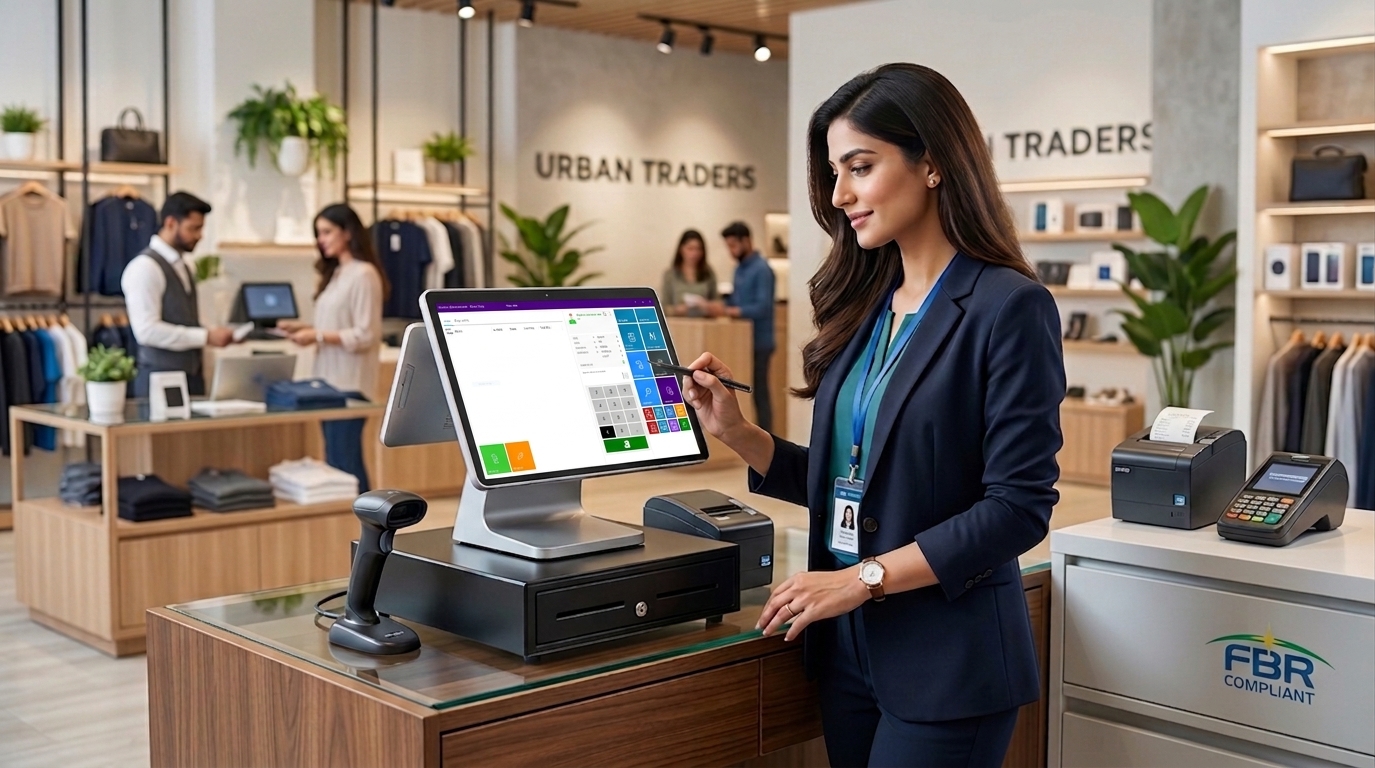
Compliance with the Federal Board of Revenue (FBR) is a central priority for local businesses. Recent FBR digital invoicing mandates require sales-tax-registered businesses, large taxpayers, retailers, and notified services to integrate their POS and ERP systems directly with FBR portals for real-time QR-coded invoice generation. ERP automation helps businesses meet compliance mandates automatically, preventing legal penalties and administrative friction.
Sector-Specific Applications Across Pakistan
- Retail & E-Commerce: Unified inventory management across physical store branches, Daraz channels, and WooCommerce platforms prevents inventory discrepancies and syncs billing.
- Manufacturing & Textiles: Automated production order tracking, raw-material costing, and waste management give plant operators clear visual oversight over profitability.
- Distribution & Wholesale: Automated order matching, credit-limit enforcement, and dispatch tracking streamline distribution chains nationwide.
- Restaurants & Hospitality: Cloud-based POS integration connects kitchen display systems directly to food aggregator platforms, inventory reordering, and tax reporting.
Common Mistakes to Avoid
- Automating Broken Workflows: Digitizing an inefficient process accelerates errors instead of eliminating them. Refine your workflow rules before configuring software.
- Selecting Disconnected Software Solutions: Adopting isolated, single-use applications creates fragmented data silos. opt for platforms that support integration via open APIs or native software suites.
- Overlooking Change Management: Employees may resist new software if they fear job redundancy. Position automation as an assistant tool that removes manual work.
- Neglecting ROI Tracker Metrics: Failing to measure pre- and post-automation benchmarks makes it difficult to track clear productivity gains and cost savings.
Future Trends in Business Automation
- Hyper automation: The convergence of AI, Machine Learning, and Robotic Process Automation (RPA) to automate complex end-to-end business processes.
- Cloud-Native Enterprise Ecosystems: Shift away from legacy, on-premises servers toward flexible cloud architectures accessible securely from mobile devices anywhere.
- Real-Time Predictive Analytics: Decision-making systems shift from reporting past performance to recommending dynamic action plans based on real-time market changes.
- Autonomous Workflows: Self-correcting supply chains that dynamically re-route shipments and re-negotiate orders based on external disruptions.
Conclusion
Business automation is no longer just about cutting costs or replacing paper logs—it is about creating an agile, error-free, and scalable enterprise built for modern markets. By replacing manual data entry with integrated software workflows, organizations can focus their energy on strategy, product innovation, and customer retention.
Whether you run a growing retail network, a manufacturing plant, or a tech enterprise, adopting structured business workflow automation is your gateway to sustained success. Evaluate your current operations, eliminate redundant manual processes, and transform your business into a digital-first enterprise today.
Recommended: Learn how to select the right business tools in our guide on [Choosing the Best ERP System for Pakistani SMEs].
Related Read: Stay compliant with local tax mandates by exploring our update on [FBR Real-Time POS & Digital Invoicing Integration].
Deep Dive: Discover strategic scaling techniques in our featured article on [Optimizing Supply Chain Operations with Automated Inventory Systems].
Frequently Asked Questions (FAQs)
What is business automation in simple terms?
Business automation involves using software and modern technology to handle recurring operational tasks—such as sending invoices, tracking stock, processing payroll, and updating customer records—without manual effort.
Is business automation suitable for small businesses and SMEs?
Yes. Cloud-based automation tools make automation for small businesses accessible without massive upfront capital. Small teams can automate billing, inventory tracking, and client messages to operate with enterprise-level efficiency.
How does business automation help with FBR compliance in Pakistan?
Integrated business management software automatically tracks sales, formats invoices to regulatory standards, and submits e-invoicing data to the FBR system in real time, preventing non-compliance penalties.
Will business automation replace human employees?
Automation does not replace human ingenuity—it removes tedious administrative work. By automating repetitive tasks, employees can focus on high-impact activities like strategic planning, client relationship management, and sales growth.
What is the difference between ERP and business workflow automation?
An Enterprise Resource Planning (ERP) system acts as the central software repository for company data. Business workflow automation consists of the underlying rules and integrations that move data seamlessly through the ERP and other applications.
How much does it cost to implement business automation?
Costs vary based on business size, scope, and software selection. Modular cloud software lets companies start small—automating single processes like invoicing or live support—and scale their investment as their returns increase.
Which business area should I automate first?
Start by automating the process that causes the most operational friction or consumes the most administrative hours—typically sales invoicing, inventory management, or accounting reconciliations.
Author Details

Syed Hussain Raza
Syed Hussain Raza is a Customer Succession and Operations Lead who drives revenue growth by connecting smart sales strategies with smooth operational workflows to eliminate bottlenecks and maximize client retention.
Related Posts

10 Sep,2026
Restaurant Management: Improve Efficiency, Sales & Customer Experience
Restaurant Management: How Smart Technology Can Improve Efficiency, Sales and Customer Experience
Running a restaurant successfully...
3 Sep,2026