

Restaurant Management: Improve Efficiency, Sales & Customer Experience

Restaurant Management: How Smart Technology Can Improve Efficiency, Sales and Customer Experience
Running a restaurant successfully requires much more than preparing great food. Behind every successful restaurant is a complex system of sales, orders, inventory, purchasing, staff management, expenses, accounting, and customer service working together.
As restaurants become more competitive, relying entirely on notebooks, spreadsheets, manual calculations, or disconnected systems can make daily operations increasingly difficult. Restaurant owners need accurate information and efficient processes to understand what is happening inside their business and make better decisions.
This is where modern restaurant management and technology can make a meaningful difference.
A well-designed restaurant management system can bring essential business activities together, helping restaurant owners monitor sales, control inventory, manage orders, track expenses, and generate useful reports from a centralized platform.
What Is Restaurant Management?
Restaurant management refers to the planning, organization, monitoring, and control of the activities required to operate a restaurant or food business effectively.
It covers practically every part of the operation, from purchasing ingredients to processing customer orders and analyzing financial performance.
Key areas include:
- Daily restaurant operations
- Food and inventory management
- Sales management
- Financial management
- Employee management
- Customer service
- Purchasing and supplier management
- Reporting and analytics
- Tax and compliance requirements
Effective management ensures that these areas work together rather than operating as isolated processes.
For example, when a customer orders a meal, that transaction can affect sales records, inventory consumption, revenue reporting, and potentially accounting records. Connecting these processes can provide restaurant management with a clearer view of business performance.
Why Effective Restaurant Management Matters
Restaurant profitability depends on controlling both revenue and costs. High sales alone do not guarantee a healthy business if inventory wastage, unnecessary expenses, billing errors, or inefficient operations are reducing margins.
Effective restaurant management helps businesses improve visibility across their operations.
Better Operational Efficiency
Organized workflows allow staff to process orders, billing, and other daily tasks more efficiently.
Improved Inventory Control
Restaurants deal with perishable ingredients, making inventory management particularly important. Better tracking can help identify shortages, wastage, and unnecessary purchasing.
More Accurate Financial Information
Accurate records of sales and expenses help owners understand the actual financial condition of their business.
Better Customer Experience
Efficient order processing and accurate billing can contribute to faster and more consistent service.
Informed Decision-Making
Instead of relying solely on assumptions, restaurant owners can use sales and operational data to identify trends and make informed decisions.
Poor management, on the other hand, can contribute to inventory wastage, incorrect billing, stock shortages, excessive expenses, accounting errors, and slower service.
Major Challenges in Restaurant Management
Modern restaurants face a variety of operational challenges. The exact problems differ according to business size and type, but several issues are common across the food industry.
- Inventory Management
Inventory is one of the most important areas of restaurant management.
Restaurants must keep enough ingredients available to meet customer demand without purchasing excessive quantities that could lead to spoilage or unnecessary costs.
Manual inventory tracking can make it difficult to answer questions such as:
- How much stock is currently available?
- Which ingredients run low?
- How much stock was consumed?
- Which products are being wasted?
- Which suppliers are being used?
- What should be purchased next?
A restaurant inventory management system can centralize this information and provide better visibility into stock movement.
- Order Management
Restaurants may handle several types of orders, including:
- Dine-in
- Takeaway
- Delivery
- Online orders
- Phone orders
Managing these orders manually can create confusion, particularly during busy periods.
A structured restaurant management system can help organize orders and connect them with billing and reporting processes.
- Billing and Payments
Billing is one of the most visible parts of the customer experience.
Slow or inaccurate billing can create frustration for customers and additional work for employees.
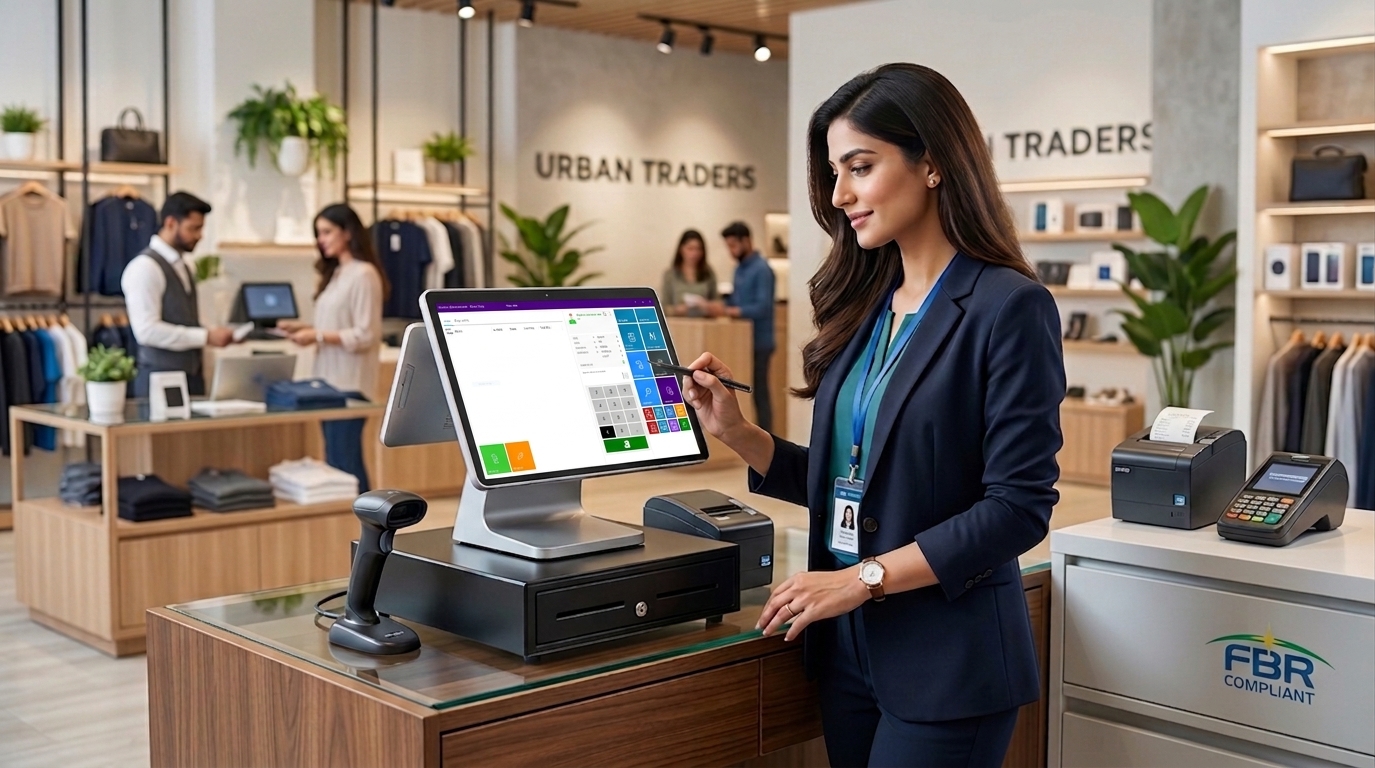
A modern restaurant POS system can help staff process transactions, generate receipts, record sales, and manage different payment methods more efficiently.
- Expense Management
Restaurants have numerous operating expenses, including ingredients, salaries, rent, utilities, packaging, maintenance, delivery, and marketing.
Without organized expense records, it can become difficult for management to understand where money is being spent.
Digital expense tracking can provide a clearer picture of operational costs and help management evaluate business performance.
- Staff Management
Employees play a central role in restaurant operations.
Management may need to monitor responsibilities, shifts, productivity, and accountability while ensuring that employees have the tools necessary to serve customers effectively.
Technology can support these processes by organizing operational information and reducing unnecessary administrative work.
- Financial Management
Sales figures provide only one part of the financial picture.
A restaurant needs to understand its sales, expenses, purchases, inventory costs, and other financial information to evaluate its overall performance.
This is why integrating restaurant operations with appropriate accounting and reporting tools can be valuable.
- Multi-Branch Management
Managing multiple branches becomes significantly more complicated when each location maintains separate records.
Restaurant owners may need to compare:
- Branch sales
- Inventory
- Expenses
- Performance
- Popular products
- Operational trends
Centralized restaurant management software can make it easier to monitor multiple locations from a common system.
The Role of Technology in Modern Restaurant Management
Technology is changing how food businesses organize and monitor their operations.
Instead of maintaining separate systems for sales, inventory, expenses, and reporting, restaurants can use integrated restaurant management software to bring important information together.
A centralized system can provide access to information related to:
- Sales
- Orders
- Inventory
- Expenses
- Customers
- Suppliers
- Accounts
- Reports
This creates a more connected operational environment.
For restaurant owners, the value of technology is not simply automation. The bigger advantage is visibility.
When management can see accurate information about business operations, it becomes easier to identify problems, evaluate performance, and make informed decisions.
How Restaurant POS Systems Improve Operations
A restaurant POS system is often at the center of digital restaurant management.
A modern POS solution can handle more than basic billing. Depending on the system, it can support order processing, table management, sales tracking, reporting, and other restaurant workflows.
Important capabilities may include:
- Fast billing
- Order processing
- Table management
- Dine-in management
- Takeaway management
- Delivery order management
- Multiple payment methods
- Receipt generation
- Sales tracking
- Daily sales reports
The real benefit comes from connecting these functions.
For example, when an order is entered into the system, the transaction can become part of the restaurant's sales record. When properly integrated with inventory management, the same transaction can also contribute to stock tracking.
This reduces the need to maintain the same information manually in multiple places.
Restaurant Inventory Management: Controlling What Matters Most
Food inventory directly affects restaurant costs.
Ingredients can expire, portions can vary, stock can be misplaced, and purchasing decisions can become difficult when accurate records are unavailable.
A digital inventory system can help restaurants monitor:
Stock Levels
Management can track available inventory and identify items that require replenishment.
Purchases
Purchasing information can be organized alongside supplier records.
Stock Adjustments
Changes caused by damaged, expired, or otherwise adjusted inventory can be recorded.
Wastage
Tracking wastage can help management identify areas where improvements may be possible.
Low-Stock Items
Alerts or reports can help staff identify ingredients that are approaching minimum stock levels.
Ingredient Consumption
For businesses that use recipes or standardized ingredients, monitoring consumption can provide greater insight into food costs.
Better inventory control does not eliminate food waste automatically, but it gives management the information needed to investigate waste and improve processes.
Sales and Revenue Management
Sales data can tell restaurant owners much more than how much money was collected on a particular day.
A restaurant management system can help analyze:
- Daily sales
- Weekly sales
- Monthly sales
- Best-selling items
- Slow-moving items
- Sales by category
- Sales by branch
- Sales trends
- Business Peak hours
Suppose a restaurant discovers that certain menu items consistently perform better during periods. Management can use this information when considering menu planning, purchasing, staffing, and promotions.
This is the value of data-driven restaurant management: decisions can be based on actual business information rather than assumptions alone.
Expense and Profit Management
One of the most important principles of restaurant management is understanding the difference between revenue and profit.
A restaurant may generate strong sales while still experiencing financial pressure because of high operating costs.
Common expenses include:
- Food ingredients
- Employee salaries
- Rent
- Utilities
- Packaging
- Delivery
- Maintenance
- Marketing
- Other operational expenses
Organized financial records help management understand these costs and compare them against revenue.
Digital restaurant accounting software or integrated financial tools can further reduce dependence on scattered paper records and manual calculations.
The objective is not simply to record expenses but to create better financial visibility.
Customer Experience and Restaurant Management
Technology should never replace the hospitality that makes a restaurant memorable.
Instead, it should help employees deliver that experience more effectively.
For example, efficient technology can support:
- Faster order processing
- Accurate billing
- Reduced waiting time
- Correct order handling
- Better table management
- Consistent service
- Customer records
- Loyalty programs
When repetitive administrative work is organized, employees can spend more time focusing on customers.
This creates an important principle for modern restaurant management:
Technology should support hospitality, not replace it.
Restaurant Management for Pakistani Businesses
The Pakistani food industry includes restaurants, cafés, bakeries, fast-food outlets, hotels, cloud kitchens, takeaway businesses, and many other food-service models.
These businesses may face challenges such as changing operating costs, food price fluctuations, inventory wastage, manual record keeping, multiple payment methods, tax and compliance requirements, increasing competition, and growing delivery demand.
For small and medium-sized businesses, maintaining accurate records can become difficult as transaction volumes increase.
A localized restaurant management system in Pakistan can help businesses organize their operations around their specific workflows while providing centralized access to important information.
The right technology should be selected according to the restaurant's actual requirements rather than simply choosing the system with the largest number of features.
Manual vs Digital Restaurant Management
|
Area |
Manual Management |
Digital Management |
|
Billing |
Time-consuming |
Faster |
|
Inventory |
Difficult to track |
Centralized tracking |
|
Sales Reports |
Manual calculations |
Automated reports |
|
Expenses |
Paper records |
Digital records |
|
Orders |
More room for errors |
Structured processing |
|
Decision-Making |
Limited information |
Data-driven |
|
Multi-Branch Control |
Difficult |
Centralized monitoring |
Digital management does not mean every manual process disappears. Instead, technology can reduce repetitive work and make business information easier to organize and access.
What to Look for in Restaurant Management Software
Selecting restaurant software is an important business decision.
Restaurant owners should consider whether a solution provides the capabilities of their business needs.
Important areas to evaluate include:
Easy-to-Use Interface
Employees should be able to learn and use the system without unnecessary complexity.
POS and Billing
The system should support the restaurant's billing and transaction requirements.
Inventory Management
Stock tracking should be suitable for the restaurant's ingredients and products.
Sales Reporting
Management should have access to meaningful sales information.
Expense Management
The system should help organize and monitor operating expenses.
Accounting Integration
Where required, restaurant operations should connect with financial management processes.
Supplier Management
Purchasing and supplier information should be organized.
Multi-Branch Support
Businesses with multiple locations may benefit from centralized monitoring.
Data Security and Backup
Business data should be protected and backed up appropriately.
Reporting and Analytics
Reports should provide useful information rather than simply generating large amounts of data.
Scalability
The system should be capable of supporting the business as its operational requirements grow.
Local Support
For businesses operating in Pakistan, accessible local technical and customer support can be an important consideration.
How to Choose the Right Restaurant Management System
There is no single restaurant management system that is perfect for every business.
Before selecting software, restaurant owners should evaluate:
- Business size
- Number of branches
- Type of restaurant
- Daily transaction volume
- Inventory complexity
- Delivery requirements
- Accounting requirements
- Reporting requirements
- Budget
- Technical support
A restaurant should also evaluate the software using real workflows.
For example, rather than simply watching a feature demonstration, management can test how the system handles an actual order from entry through billing and reporting.
This provides a better understanding of whether the system fits the restaurant's daily operations.
Benefits of Adopting Restaurant Management Software
When appropriately implemented, restaurant management software can provide several operational advantages.
Better Operational Visibility
Management can access important business information from a centralized system.
Improved Inventory Control
Stock information becomes easier to monitor and analyze.
Faster Billing
Digital POS systems can streamline transaction processing.
Organized Records
Sales, expenses, orders, and other information can be maintained systematically.
Better Financial Monitoring
Management can compare sales and expenses more effectively.
Reduced Manual Work
Automating repetitive processes can save employee time.
Improved Reporting
Digital reports can provide useful insights into business performance.
Better Decision-Making
Accurate information supports more informed business decisions.
Greater Accountability
Centralized records can improve operational transparency.
Easier Expansion
A structured digital system can provide a stronger foundation for businesses that plan to grow or operate additional branches.
These benefits depend on proper implementation, staff training, accurate data, and selecting software that fits the business.
The Future of Restaurant Management
Restaurant management is increasingly becoming connected and data driven.
Several technologies are shaping the future of industry, including:
- Cloud-based restaurant systems
- Digital payments
- Online ordering
- Automated reporting
- Data analytics
- AI-assisted forecasting
- Digital customer loyalty
- Integrated delivery systems
- Centralized multi-branch management
Artificial intelligence may also become increasingly useful for analyzing historical sales patterns, forecasting demand, and supporting operational decisions.
However, technology alone will not determine the success of a restaurant.
The strongest businesses will continue to combine good food, excellent service, efficient operations, responsible financial management, and appropriate technology.
Conclusion
Effective restaurant management is about bringing different parts of a food business together and ensuring that they work efficiently.
From inventory and orders to sales, expenses, staff, accounting, and customer service, every area contributes to the overall performance of the restaurant.
Traditional manual processes may work for a small operation, but as transaction volumes and operational complexity increase, digital tools can provide greater visibility and organization.
A modern restaurant management system can help businesses centralize information, streamline daily workflows, monitor inventory, track sales and expenses, generate reports, and support better decision-making.
The objective is not technology for its own sake. It is about building a restaurant operation that is more organized, measurable, efficient, and prepared for sustainable growth.
Efficient Operations + Accurate Data + Inventory Control + Financial Visibility + Customer Experience form the foundation of effective modern restaurant management.
Author Details

Syed Hussain Raza
Syed Hussain Raza is a Customer Succession and Operations Lead who drives revenue growth by connecting smart sales strategies with smooth operational workflows to eliminate bottlenecks and maximize client retention.
Related Posts
10 Sep,2026
Restaurant Management: Improve Efficiency, Sales & Customer Experience
Restaurant Management: How Smart Technology Can Improve Efficiency, Sales and Customer Experience
Running a restaurant successfully...
3 Sep,2026