

Retail Management in 2026: How AI-Powered POS Software Is Transforming Retail Businesses in Pakistan.
Introduction
The retail landscape in Pakistan is undergoing a monumental shift. As we navigate through 2026, retail business owners—from bustling supermarkets in Karachi and Lahore to high-end fashion boutiques in Islamabad and local pharmacies in Multan—face an increasingly complex operational environment. The days when a simple cash register and a manual ledger could comfortably sustain a growing retail enterprise are officially behind us.
Modern Pakistani retailers are confronting a unique combination of commercial pressures:
- Expanding Product Catalogs: Managing thousands of Stock Keeping Units (SKUs) across dynamic categories with varying tax structures.
- Evolving Consumer Expectations: Shoppers now demand rapid checkout times, digitized receipts, instant loyalty points, and unified multi-channel experiences.
- Digital Payment Adoption: The rapid rise of digital wallets, debit/credit card payments, QR code transactions, and Raast instant payments alongside cash.
- FBR and Regulatory Compliance: Strict integration requirements with the Federal Board of Revenue (FBR) POS system and provincial tax authorities (SRB, PRA, KPRA, BRA) requiring real-time tax invoicing.
- Inventory & Supply Chain Pressures: Rising inflation, currency fluctuations, and supplier delays demand precise stock control to prevent overstocking capital or suffering costly stock outs.
To remain competitive and profitable in this environment, forward-thinking retailers are moving beyond traditional cash registers. The solution lies in merging modern Retail POS Software with intelligent retail management workflows and artificial intelligence capabilities. This guide explores how AI-powered point-of-sale systems are reshaping retail management in Pakistan, turning everyday transaction data into automated operational efficiency and commercial growth.
What Is Retail Management?
At its core, retail management encompasses all the strategy, processes, and daily operational activities required to bring customers into a store and manage business operations efficiently from purchase to sale. It is the art and science of running a retail store profitably while delivering a seamless shopping experience.
A complete retail management ecosystem spans several interconnected business functions:
- Sales & POS Operations: Managing checkout transactions, pricing, discounts, promotions, and payment processing.
- Inventory & Stock Management: Tracking stock levels in real time, managing SKU variants (sizes, colors, expiry dates, batch numbers), and handling stock transfers.
- Procurement & Supplier Relations: Generating purchase orders, tracking vendor deliveries, managing cost variations, and optimizing reorder quantities.
- Customer Relationship Management (CRM): Capturing customer profiles, purchase history, loyalty rewards, and targeted engagement.
- Store & Employee Operations: Monitoring cashier performance, shift management, register reconciliation, and user permission controls.
- Financial Management & Reporting: Tracking gross margins, operating expenses, daily cash flow, vendor liabilities, and tax obligations.
- Multi-Branch Operations: Maintaining centralized control and visibility across multiple physical outlets, franchises, or warehouse facilities.
When a retail business starts small, a proprietor might keep track of these functions manually or across fragmented spreadsheets. However, as stock volume increases, product catalogs expand into thousands of items, and customer footfall grows, managing these functions in silos becomes impossible. Without integrated Retail Store Management Software. Operational friction rapidly eats into profit margins.
Why Traditional Retail Management Is Becoming Difficult
Many traditional Pakistani retail businesses still rely on legacy desktop billing software, basic cash registers, or unlinked Excel sheets. While these methods served well in previous decades, they create critical bottlenecks for mid-sized and enterprise retailers today:
- Manual Billing & Long Queues: Slow cashier lookups during peak business hours lead to long checkout queues, customer frustration, and abandoned shopping carts.
- Inventory Inaccuracies & Phantom Stock: Without real-time updates across sales and procurement, physical stock rarely matches register records, leading to pilferage, misplacement, and undetected shrinkage.
- Overstocking vs. Stock Shortages: Capital gets tied up in slow-moving stock while fast-selling high-margin items run out completely because store managers lack predictive visibility into reorder thresholds.
- Lack of Real-Time Sales Visibility: Business owners who manage multiple branches are often forced to wait until the end of the day—or week—to receive consolidated sales reports, preventing quick operational adjustments.
- Human Errors & Revenue Leakage: Manual price overrides, unrecorded discounts, manual cash counting errors, and inaccurate manual tax calculations create revenue leaks.
- Fragmented Customer Data: Customer purchase histories remain trapped in paper receipts or disconnected billing tools, preventing meaningful loyalty programs or personalized marketing.
- Disconnected Physical and E-Commerce Channels: Retailers operating both physical stores and online e-commerce channels often struggle to sync inventory levels, leading to overselling online.
The Retail Cost of Manual Operations: A retail store with 5,000 SKUs losing just 1.5% of annual stock to untracked shrinkage, expiration, or stockouts loses hundreds of thousands of Rupees in potential profit every month. Modern digital retail management minimizes these losses through automated tracking.
How POS Software Supports Modern Retail Management
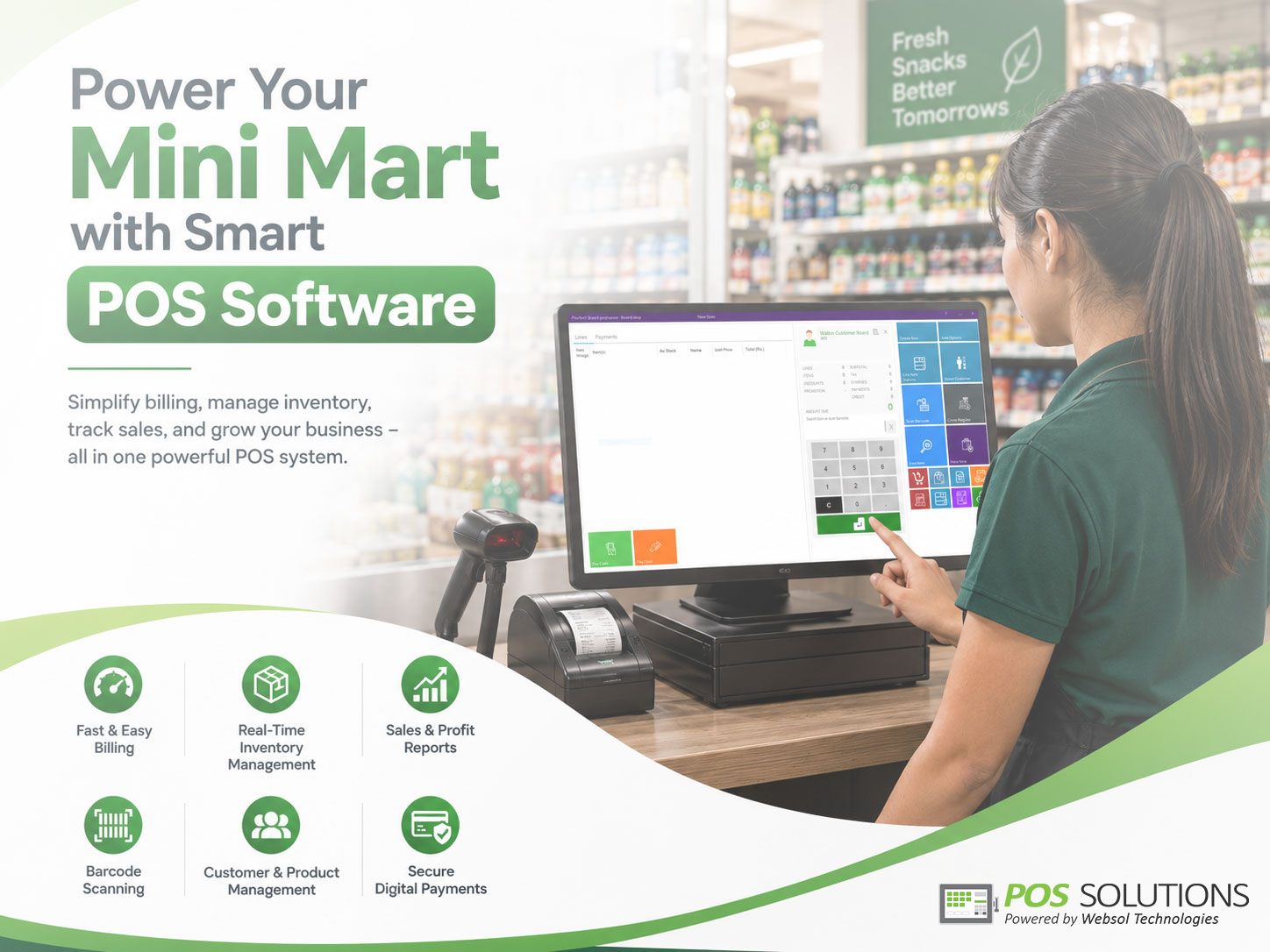
A modern Retail POS System is no longer just a digital cash register; it is the central brain of a retail enterprise. By consolidating transactions, stock management, customer data, and financial reporting into a unified engine, POS software transforms day-to-day store management.
Faster Billing and Checkout
Equipped with high-speed barcode scanning, automated price calculations, multi-currency cash drawer management, and instant receipt printing, a robust retail POS system minimizes transaction times to seconds. Cashiers can apply pre-configured promotional discounts, split payments between cash and digital wallets, and automatically calculate tax obligations in real time without manual mathematical errors.
Real-Time Inventory Management
Every time a product is scanned at the checkout, the system instantly deducts that unit from central inventory. Retailers gain full visibility into exact stock counts across shelves, stockrooms, and remote warehouses. Automatic low-stock alerts notify managers when key inventory reaches safety stock limits, allowing purchase orders to be generated before items run out.
Sales and Performance Reporting
Modern POS platforms transform raw transaction data into interactive visual dashboards. Retail store owners can monitor key performance indicators (KPIs) on demand:
- Hourly, daily, weekly, and monthly gross sales and net profit margins.
- Top-performing products, product categories, and brands.
- Dead stock and slow-moving inventory require markdown sales.
- Cashier speed, register balancing accuracy, and sales performance by shift.
Customer Relationship Management (CRM)
By capturing customer phone numbers during checkout, POS software builds a rich database of buyer habits. Retailers can reward recurring shoppers with automated point-based loyalty programs, store credit accounts, personalized SMS discount coupons on birthdays, and targeted category recommendations based on historic purchase behavior.
Multi-Branch Retail Management
For expanding retail brands operating multiple stores across cities like Karachi, Lahore, Rawalpindi, and Faisalabad, centralized management is essential. Modern Multi-Branch POS Software allows headquarters to adjust master price lists, push promotional campaigns, transfer stock between branches, and compare branch-by-branch profitability from a single unified control panel.
How AI Is Changing Retail Management
Artificial Intelligence represents the next major evolutionary step in retail technology. Rather than replacing existing retail systems, AI enhances traditional POS and inventory platforms by analyzing vast amounts of operational data to surface predictive insights and automate complex decisions.
AI Sales Analytics
Traditional POS systems tell you what sold yesterday; AI sales analytics explain why it sold and predict what will sell tomorrow. By analyzing historical sales velocity alongside seasonal trends, promotional calendars, day-of-week fluctuations, and regional buying trends, AI identifies hidden patterns that manual analysis misses.
Predictive Inventory Management
Stock management is often a guessing game based on gut feeling. Predictive inventory analytics changes this by evaluating historical lead times, supplier reliability, seasonal demand surges (such as Ramadan, Eid, or back-to-school seasons in Pakistan), and real-time sales speed. The AI algorithm generates smart reorder recommendations, calculating exact purchase quantities to minimize holding costs while guaranteeing zero stockouts on high-velocity items.
Customer Behavior Analysis
AI models analyze cross-basket purchasing patterns to uncover products frequently bought together (e.g., specific baking ingredients during festival seasons or complementary garments). Retailers can use these insights for smarter visual merchandising, optimized shelf placement, targeted cross-selling at checkout, and customized bundling strategies.
Automated Business Insights
Instead of requiring business managers to spend hours shifting through dense raw data spreadsheets, intelligent reporting engines generate executive summaries highlighting anomalous sales drops, unusual inventory shrinkage patterns, or emerging product trends automatically. Managers receive proactive alerts on key operational metrics straight to their mobile dashboards.
Smarter Retail Decision-Making
It is important to emphasize that AI in retail is designed to complement human management, not replace store managers or entrepreneurs. AI handles heavy mathematical lifting and pattern recognition, giving business owners actionable recommendations so they can focus on strategic growth, vendor negotiation, and customer experience refinement.
AI + POS + ERP: The Future of Retail Business Management
To understand where retail technology is heading in 2026, it is helpful to look at how different software layers work together within a growing retail enterprise:
- POS (Point of Sale): Front-of-house transaction processing, barcode scanning, customer checkout, and daily register closing.
- ERP (Enterprise Resource Planning): Back-of-house enterprise operations including deep financial accounting, vendor payables/receivables, human resources, supply chain procurement, and regulatory audit trails.
- AI (Artificial Intelligence Layer): The intelligent analytical overlay that connects POS sales data with ERP supply chain data to run predictive models, forecast demand, and automate workflow triggers.
When these three systems are seamlessly integrated, a retail business operates as a synchronized ecosystem. A sale made at a POS checkout counter instantly updates inventory in the ERP, updates the general ledger accounting journals, calculates real-time tax liabilities, and feeds transaction data into the AI forecasting model to update the upcoming weekly vendor purchase plan.
Right-Sizing Solutions: Not every retail business requires a complex, high-overhead enterprise ERP on day one. A growing store can start with a strong standalone Cloud POS and seamlessly scale into an integrated POS and ERP Software ecosystem as multi-branch operations and inventory complexity grow.
Key Benefits of AI-Powered Retail Management Software
Adopting an advanced, automated retail management solution delivers immediate, tangible return on investment across store operations:
- 360-Degree Inventory Visibility: Complete elimination of ghost stock, untracked inventory losses, and manual stock counts through automated real-time audit logs.
- Accelerated Checkout Speeds: Drastically reduced customer waits time, leading to higher customer satisfaction and increased footfall capacity during peak shopping hours.
- Elimination of Manual Administrative Work: Automated generation of purchase orders, stock transfer notes, daily sales summaries, and tax reporting spreadsheets.
- Precision Financial & Tax Reporting: Real-time tracking of net profit margins after accounting for cost of goods sold (COGS), discounts, tax obligations, and store operating expenses.
- Accurate Sales Forecasting: Predictive purchasing based on machine-learned sales velocity rather than intuition, preventing capital lockup in slow-moving inventory.
- Deeper Customer Understanding: Data-backed clarity on customer purchasing cycles, top customer segments, and campaign effectiveness.
- Centralized Multi-Branch Control: Total operational oversight across multiple retail stores from anywhere in the world via secure web dashboards or mobile applications.
- Rapid Data-Driven Decision Making: Instant access to real-time store metrics allowing managers to launch promotions, clear dead stock, or reorder hot items within minutes.
- Maximized Operational Efficiency: Streamlined store workflows that allow existing store staff to handle higher volumes of sales and stock movement without friction.
- Scalable Business Foundation: A reliable digital architecture that allows retailers to open new branches or add online e-commerce channels seamlessly.
Retail Management in Pakistan: Navigating Local Requirements
Retail management in Pakistan comes with specific localized challenges that off-the-shelf international software often fails to address adequately. A viable POS Software in Pakistan must be purpose-built for the local business environment.
Key localized operational and compliance considerations include:
- FBR POS Integration & Digital Invoicing: Mandatory compliance with the Federal Board of Revenue requires tier-1 retailers and integrated retail businesses to issue real-time tax invoices with FBR QR codes and unique Invoice Numbers (USIN). Software’s must support seamless, reliable API connectivity to avoid costly tax penalties (FBR Digital E-Invoicing).
- Provincial Tax Compliance: Seamless compatibility with provincial revenue authorities including the Sindh Revenue Board (SRB), Punjab Revenue Authority (PRA), Khyber Pakhtunkhwa Revenue Authority (KPRA), and Balochistan Revenue Authority (BRA) where retail services or localized tax dynamics apply (SRB POS Integration).
- Hybrid Cloud & Desktop Architecture: Internet connectivity disruptions can halt retail store operations. The best POS systems feature offline-first local synchronization—allowing sales and billing to continue uninterrupted during internet outages, automatically syncing data to the cloud once connection is restored.
- Localized Payment Integration: Direct support for Pakistani payment gateways, debit/credit POS terminals, and instant digital wallet QR transfers.
- Omnichannel Retail Integration: Synchronizing physical retail inventory in real time with popular e-commerce platforms (such as Shopify, WooCommerce, or custom sites) so online and in-store inventory remain perfectly balanced (E-Commerce Integration).
What Features Should Retailers Look for in POS Software?
When evaluating potential retail software vendors in Pakistan, store owners and operations managers should use the following comprehensive checklist:
|
Feature Category |
Essential Capabilities |
Why It Matters |
|
Billing & Invoicing |
Fast barcode scanning, hold/resume sales, multiple payment tender options, quick keys, automated discounts. |
Eliminates long checkout queues and improves customer satisfaction at peak sales hours. |
|
Inventory Control |
Batch & expiry tracking, multi-unit conversions (cartons/pieces), variant matrix (size/color), reorder alerts. |
Prevents stockouts, reduces stock expiration losses in pharmacies and marts, and maintains stock accuracy. |
|
Regulatory Compliance |
Real-time FBR POS integration, SRB/PRA integration, localized tax rate configuration, tax-compliant receipts. |
Ensures complete compliance with Pakistani tax laws and prevents severe regulatory penalties. |
|
Multi-Branch Sync |
Centralized dashboard, stock transfers, unified price lists, branch-wise profitability reporting. |
Allow business owners to scale from a single store to a multi-city retail chain seamlessly. |
|
Financial Accounting |
Integrated chart of accounts, accounts payable/receivable, cash flow tracking, expense logging. |
Provides clear profitability insights without requiring separate manual accounting software. |
|
E-Commerce Sync |
Two-way API sync for web orders, customer profiles, and real-time inventory adjustments. |
Prevents overselling online and creates a unified omnichannel customer shopping experience. |
|
Data Security & Access |
Role-based user permissions, audit logs, automated cloud backups, register shift balancing. |
Protects sensitive business data and prevents internal cash drawers or inventory tampering. |
|
Analytics & Support |
Interactive dashboards, sales trend analytics, local implementation support, ongoing training. |
Ensure smooth system adoption and provides continuous actionable insights for business growth. |
How Websol POS Supports Modern Retail Management
As a pioneering technology provider in Pakistan, Point of Sale Pakistan / Websol Technologies has spent years developing robust, localized software built specifically for Pakistani retail operations. Their flagship software platforms—including Muhasib ERP and dedicated retail POS platforms—are designed to take Pakistani businesses from manual friction to complete digital automation.
Websol Technologies delivers tailored software solutions across diverse retail verticals:
- Supermarkets & Marts: High-speed billing for massive SKU catalogs, weight scale machine integrations, and batch/expiry tracking for perishable consumer goods (POS Software for Supermarkets).
- Fashion & Apparel Boutiques: Complete matrix management for clothing sizes, colors, seasonal collections, and promotional discount schemes.
- Pharmacies & Healthcare Retail: Strict batch tracking, formula/generic lookups, expiry notifications, and fast prescription billing.
- Multi-Branch Enterprise Chains: Centralized inventory replenishment, cross-branch stock visibility, and consolidated executive reporting.
Websol POS platforms come natively equipped with real-time FBR POS Integration, guaranteeing compliant invoice generation with FBR QR codes. Furthermore, Websol bridges the gap between front-of-house retail billing and full-scale enterprise resource planning through seamless integration with Muhasib ERP, giving business owners end-to-end control over procurement, vendor payables, general ledger accounting, and multi-location logistics.
How to Choose the Right Retail Management Software
Selecting the Best POS Software in Pakistan for your store is a strategic decision that directly impacts operational success. Every retail business has unique priorities; a decision framework based on the following steps ensures you choose the right partner:
- Audit Your Operational Complexity: Assess your current SKU volume, number of checkout counters, daily transaction count, and whether you deal with complex inventory elements like expiry dates or garment sizes.
- Define Regulatory & Tax Needs: Confirm whether your retail store falls under mandatory FBR tier-1 integration or provincial tax authority requirements. Ensure the software vendor provides native, hassle-free integration.
- Evaluate Hardware & Network Infrastructure: Choose software compatible with standard barcode scanners, thermal receipt printers, cash drawers, and touch-screen terminals. Verify that the software includes robust offline mode capabilities for uninterrupted billing during internet downtime.
- Review Scalability & Integration Needs: Ensure the software can grow with ambition, whether that means opening 10 new branches, launching an online store, or integrating full ERP accounting in the future.
- Demand Dedicated Local Support & Training: Software is only as effective as the team operating it. Choose an established local provider like Point-of-Sale Pakistan / Websol Technologies that provides hands-on staff training, site deployment, and reliable ongoing technical assistance.
The Golden Rule of POS Selection: The "best" POS software is not simply the system with the longest feature list—it is the system that aligns precisely with your specific daily operational workflows, complies with local laws, and provides dependable local customer support.
Conclusion
The Pakistani retail sector in 2026 is faster, more competitive, and more digital than ever before. Retail management has evolved far beyond manual ledger keeping or simple cash register billing. Success today requires unified control over sales, real-time inventory tracking, local FBR tax compliance, and multi-channel customer engagement.
By leveraging modern POS software, business owners can eliminate administrative friction, prevent inventory shrinkage, speed up customer checkout, and gain absolute financial clarity across single or multi-branch stores. Furthermore, as artificial intelligence and predictive analytics continue to mature within software ecosystems, data-driven forecasting will increasingly distinguish market leaders from struggling businesses.
Whether you manage a neighborhood mart, an expanding pharmacy chain, or a multi-city fashion brand, investing in the right retail management technology is the single most impactful step toward building a scalable, profitable retail enterprise.
Author Details

Syed Hussain Raza
Syed Hussain Raza is a Customer Succession and Operations Lead who drives revenue growth by connecting smart sales strategies with smooth operational workflows to eliminate bottlenecks and maximize client retention.
Related Posts

10 Sep,2026
Restaurant Management: Improve Efficiency, Sales & Customer Experience
Restaurant Management: How Smart Technology Can Improve Efficiency, Sales and Customer Experience
Running a restaurant successfully...
3 Sep,2026